
4·
22 days agoThanks for this perspective. I keep forgetting that culture is everything about how these social mechanisms exist and operate.
Thanks for this perspective. I keep forgetting that culture is everything about how these social mechanisms exist and operate.
Which makes the destruction of roads all the more amusing: I don’t think it accomplished anything. Nobody wants to invade The Hermit Kingdom. Ever. Doing so would be a net loss. Korea can just get the job done by remote like it’s a game of Starcraft.
I’ve also heard it as “no plan survives contact with the enemy.”
Russian troops are all dependent on commands from an officer!
To me, that sounds like they never updated command and communication strategies from, oh… the 18th century? This works great where you have regimented battalions with muskets and bayonets, all lined up on a single battlefield with clear lines of sight. But introduce so much as an opposing guerilla unit or machine guns (let alone tanks, air support, and artillery you can’t even see) and it all goes to hell in a hand-basket.
For me it’s the damn scale under the bag, and how long the kiosk takes to register the weight of the last scanned item. Then the system “unlocks” and lets me scan another item. This system slows me down to the speed of the worst clerk in the store.
Maybe? I think that’s open to interpretation. IMO, only the devs at Bethesda can make that call.
Me? I’m not going to hold onto the opinion that it’s game-breaking so strongly. After all, if you’re having fun, what’s the problem?
Well, it’s a shitpost so: Hacks and exploits. But since it’s Skyrim, probably just exploits.
True, but it’s clearly no Powerthirst.
Oh, is that what this is? Here I was thinking they “shipped Amazon Prime” to people and thought “well that’s bad grammar but… what did they actually ship using Prime?”
And yeah, fuck that guy.
Not just porn, but classic art by a famous artist. Check out Hokusai’s “The Dream of the Fisherman’s Wife.”
I recently spotted one that had this two-tone paint: copper and purple. I couldn’t decide if it was an improvement or not.
You are living up to, and by my estimation exceeding, your username. Sorry to hear you had a rough childhood. Glad to hear that things are better - you sound like an awesome host.
That’s a “lawful evil” move if I’ve ever seen one. I like it.
Ukraine has been converting these to infantry support weapons by adding a bipod, carry handle, shoulder stock, gigantic muzzle break(to make recoil bearable), new handle and new trigger assembly.
That laundry list of upgrades makes me appreciate how hard it must be to machine a good receiver and barrel for something like this; those are practically the only parts not listed.
This reads like they may as well have just dropped raw lead shot out of a hole in the fuselage, like a diver dumping their ballast.
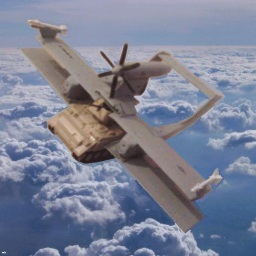
Good point. Now the tank makes sense.
it’s got a ro-ro ramp for the tank!
I just laughing at the implications of this.
Sir, we have to abandon the mission. The enemy has closed their deep sea port - we cannot possibly launch an amphibious assault.
What a nightmare. It’s bad enough that the Russian army is treated like cannon-fodder by their own leadership. But institutionalized abuse and hard-core hazing? I’m actually kind of shocked. I guess this is about as strong an argument for the importance and efficacy of leadership modeling that you can find.
“In Russia, fraternity rushes you.”